
Buying or leasing a second-hand bicycle in 2026: what should you pay attention to?
Buying a second-hand bicycle is more popular than ever. And that makes sense: you pay less, you make a sustainable choice, and you often find high-quality bikes at a sharp price. Whether you’re looking for a city bike, a sporty bike, or a second-hand electric bike, the range is large.
But be careful: without the right knowledge, you risk making the wrong choice.
So what exactly should you pay attention to when buying or leasing a second-hand bicycle?
Preparation
What should you pay attention to before buying or leasing a second-hand bicycle?
Determine the type of bike that suits you
First, think about how you will use the bike. Will you mainly be making short trips to work or the shops? Do you need to take your children with you on the bike? Are you dreaming of long weekend rides, or do you want to cover longer distances quickly and efficiently?
So many questions. So many options. And suddenly, you can’t see the wood for the trees anymore.
That is exactly why it is important to clearly define your usage. For everyday comfort, people often choose a city bike or an e-bike. If you are more sport-oriented, you will quickly end up with a road bike or gravel bike. But there is more: a cargo bike for transporting children or groceries, a folding bike for flexibility on the go, or a speed pedelec if you want to cover longer distances quickly.
By clearly identifying your real needs in advance, you avoid a bad purchase and choose a bike you will enjoy for many years.
Pay attention to the correct frame size
A bicycle should above all be comfortable. Therefore, check whether the saddle and handlebars can be properly adjusted to your height. It’s a bit like choosing shoes: every brand sizes differently. For example, bikes from Moustache often run slightly smaller, while Cannondale tends to run larger.
Also note: e-bikes often use different sizing charts than road bikes. An incorrect frame size can lead to discomfort and reduce your riding enjoyment.
Not sure? Ask your local bike shop for advice.
Also be sure to read this article: What size bike do I need? Here’s how to determine your frame size!

Set your budget
Set a budget in advance and take possible extra costs* into account, such as:
- New tires
- Maintenance or repairs
- Accessories such as panniers, a helmet, etc.
A cheap bike can end up being more expensive if it requires a lot of work.
*At Cyclobility, second-hand bicycles are always checked and, where necessary, fitted with new parts, so you won’t be faced with unexpected costs.
Compare prices
Check similar models online to see whether the asking price is realistic. Be careful: a noticeably low price can be a warning sign of hidden defects or even theft.
If you buy second-hand from a private seller, the price is often lower, but keep in mind possible extra costs as mentioned above. If you buy through a bike shop, you will usually pay a bit more, but in return you often get better service and a warranty, which is included in the price.
Bike inspection
What should you pay attention to when checking a second-hand bicycle?
Buying a second-hand electric bike – what to look out for?
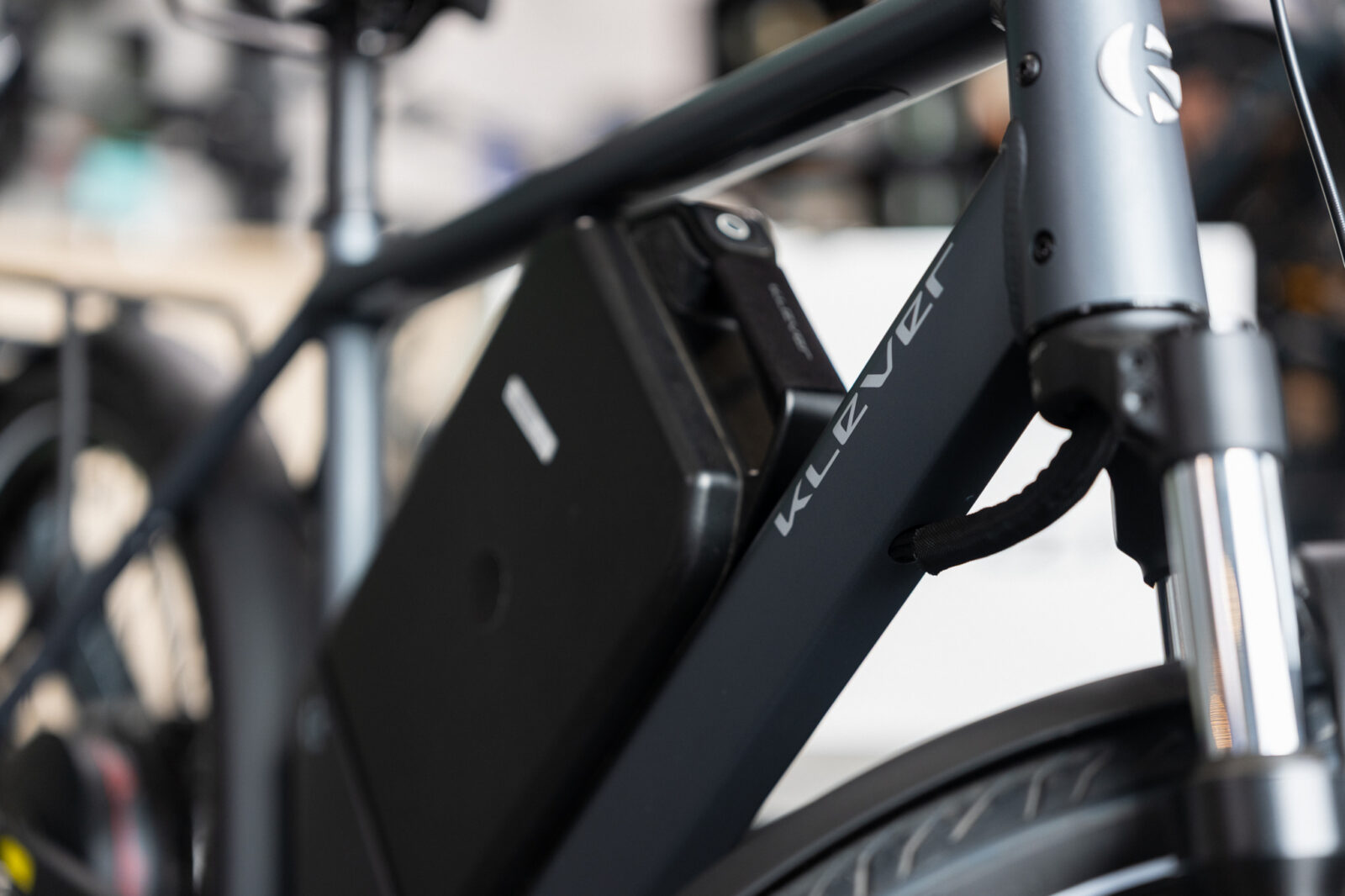
Buying a second-hand electric bike requires extra attention. The motor and battery largely determine the value of the bike.
Pay close attention to:
- Battery capacity: how old is the battery and what range does it still offer?
- Motor: does it run smoothly and without jerks?
- Display and electronics: everything must function correctly
- Brand of electrical components: important for after-sales support of your e-bike. Not every system is supported by bike dealers. In case of problems, repairs can be difficult, expensive, or sometimes even impossible. Therefore, choose a reliable and commonly used brand.
A new battery can easily cost between €400 and €2000. Keep this in mind when setting your budget.
Check the frame for damage and rust
The frame is the most important part of the bicycle. Therefore, pay attention to:
- Cracks or fractures (especially around welds)
- Visible dents or bends
- Rust on steel frames
Carbon frames: be extra careful with damage. Damage is not always visible, and repairs are possible but often expensive and may affect safety.
If you notice structural damage, it is better to walk away from the purchase, as repairs are often more expensive than the bike itself.
Check tyres, brakes and gears
These components are crucial for your safety. Check:
- Tyres: sufficient tread and no cracks
- Brakes: do they respond quickly and powerfully?
- Gears: do they shift smoothly without hesitation?
If you hear unusual noises or something feels stiff, expect extra costs or ask the seller to fix it before you proceed with the purchase.
Watch for wear on the chain or belt and sprockets
The drivetrain of a bicycle wears out over time. Pay attention to:
- Chain: is it rusty or stretched?
- Sprockets: are the teeth sharp or clearly worn?
If in doubt, ask your bike dealer for advice to assess the wear and estimate how many kilometres you can still ride with the current drivetrain. Also keep in mind that replacement costs can add up quickly.
If the bike has a belt drive , also check the sprockets: as mileage increases, they will gradually wear down.

Test the bicycle lights
Check whether the front and rear lights are working and ask how they are powered (battery or dynamo). This is especially important if you often cycle in the dark.
Always take a test ride
A test ride is essential when buying a second-hand bicycle. Pay attention to:
- Riding comfort and posture
- Stability while riding
- Any noises or vibrations
- Gears: do they shift smoothly?
- Brakes: test them thoroughly, including an emergency stop
- Electric assistance (if applicable)
- Battery: can it be easily removed and does charging work properly?
- Accessories included (display, keys, etc.)
- Suspension: does it work smoothly or does it stick?
If something doesn’t feel right, it is usually not a good match.
Check whether the bike is stolen
Avoid problems by:
- Asking for proof of purchase or maintenance documents
- Checking the frame number
- Verifying the number in a bicycle theft registry
If the origin is unclear, it is better not to buy the bike.
Practical tips when buying a second-hand bicycle
Tip 1: Negotiate the price wisely
Do you notice small defects? Use them as an argument to lower the price. Negotiation is very normal when buying second-hand.
Tip 2: Prefer buying from a bike shop
You may pay a bit more, but you get:
- Warranty
- Pre-sale technical inspection
- After-sales service
This provides extra security and peace of mind.
Tip 3: Avoid impulse purchases
Take your time and compare multiple options. The first good deal is not always the best one.
Tip 4: Bring someone with knowledge
An extra pair of eyes can help spot hidden defects. Someone who looks at the bike objectively, without purchase intent, is less influenced by enthusiasm and can therefore add real value.
Tip 5: Check the seller
Buying from a private seller? Pay attention to reliability and transparency.
Buying or leasing a second-hand bicycle?
Do you want to buy or lease a second-hand bicycle? Then Cyclobility is the right place for you! Discover our second-hand bikes online or visit one of our bike shops in Aalst , Aalter , Ghent , Kluisbergen , Lier , Roeselare , Sint-Niklaas or Zedelgem.

Frequently asked questions
When is it better not to buy a second-hand bicycle?
Do not buy a second-hand bicycle if:
- The frame is damaged
- The bike seems poorly maintained
- The seller does not provide clear information
- The price is “too good to be true”
- You have doubts after the test ride
The golden rule? Doubt = don’t do it.
How much does a second-hand bicycle cost?
The price of a second-hand bicycle depends on the type, brand, age, and especially the condition of the bike. On average, you can expect €250 to €900 for a city bike, €1,000 to €3,500 for an electric bike, €2,500 to €6,000 for a speed pedelec, and €800 to €4,000 or more for a road bike or mountain bike. High-end or recent models can exceed these ranges.
An entry-level model will usually be cheaper than a premium bike, but usage also plays a major role. A well-maintained bike with low mileage retains its value better than a heavily used one.
For a second-hand electric bike or speed pedelec, the battery is an important factor. If it is already somewhat old, it can lower the price. Keep in mind that a new battery can quickly cost between €600 and €2,000.
In short, it’s best not to look only at the price, but mainly at the balance between condition, quality, and expected lifespan. That’s how you know whether you are really getting a good deal.
Can you finance a second-hand bicycle with a loan?
Yes, you can! There are also financing options available for a second-hand bicycle.
Check the options via: https://www.cyclobility.be/en/bike-loan
Can you insure a second-hand bicycle, and is it worthwhile?
Yes, you can insure a second-hand bicycle. This is especially worthwhile for:
- Electric bikes
- More expensive models
- Daily use
Insurance protects you against theft and damage, allowing you to cycle without worries.
Can you lease a second-hand bicycle?
Yes, that is possible if your employer agrees.
“In theory, you can ride an electric bike for 30,000 kilometres without much loss of capacity. People ride about 2,500 kilometres per year with an electric bike, so you can expect a lifespan of around twelve years.”


